My Inner Child and My Swamp Creature Are at War: A Love Letter to IFS Therapy

Let me just say right off the bat that I really am a fan. This is, after all, a love letter. I’m going to present the mental health care approach to Internal Family Systems therapy in a completely non-professional and (hopefully) witty way, but only because I’m wired that way.
I’m telling you this not just because people-pleasing 8-year-old Sarah wants to feel reassured that if her therapist reads this, she won’t be offended, but also because I truly respect the years of research and the work of the therapists (yes, like mine) who have figured out how to apply that research to a method that has helped countless people just like me.
Anyway. If you, too, encounter things like:
Decision paralysis
Anxiety/panic that impacts sleep
Low self-esteem
Social triggers that seem not-so-coincidentally related to childhood experiences
Incessant guilt
Hyper vigilance
Rabbit holes of doom
…you just might benefit from Internal Family Systems Therapy. Let’s just go with IFS from here on out, actually. I don’t love how close this acronym is to both Irritable Bowel Syndrome (IBS) and the IRS, but I also don’t want to keep typing this out.
Internal Family Systems Therapy: The Basics
A few decades ago, Richard Schwartz, known as the “father” of this method (which is kind of funny given the nature of this therapy), outlined his understanding of how each of us are informed by the “parts” that make up our psyche. Essentially, Schwartz developed the idea that instead of a single, unified mind, people are made up of different parts or archetypes — roles like inner critic, people-pleaser, manager, and so on, and in the background (sort of) is a “Self,” basically your core being. Ideally, your parts work seamlessly together. Except, of course, they don’t, not usually.

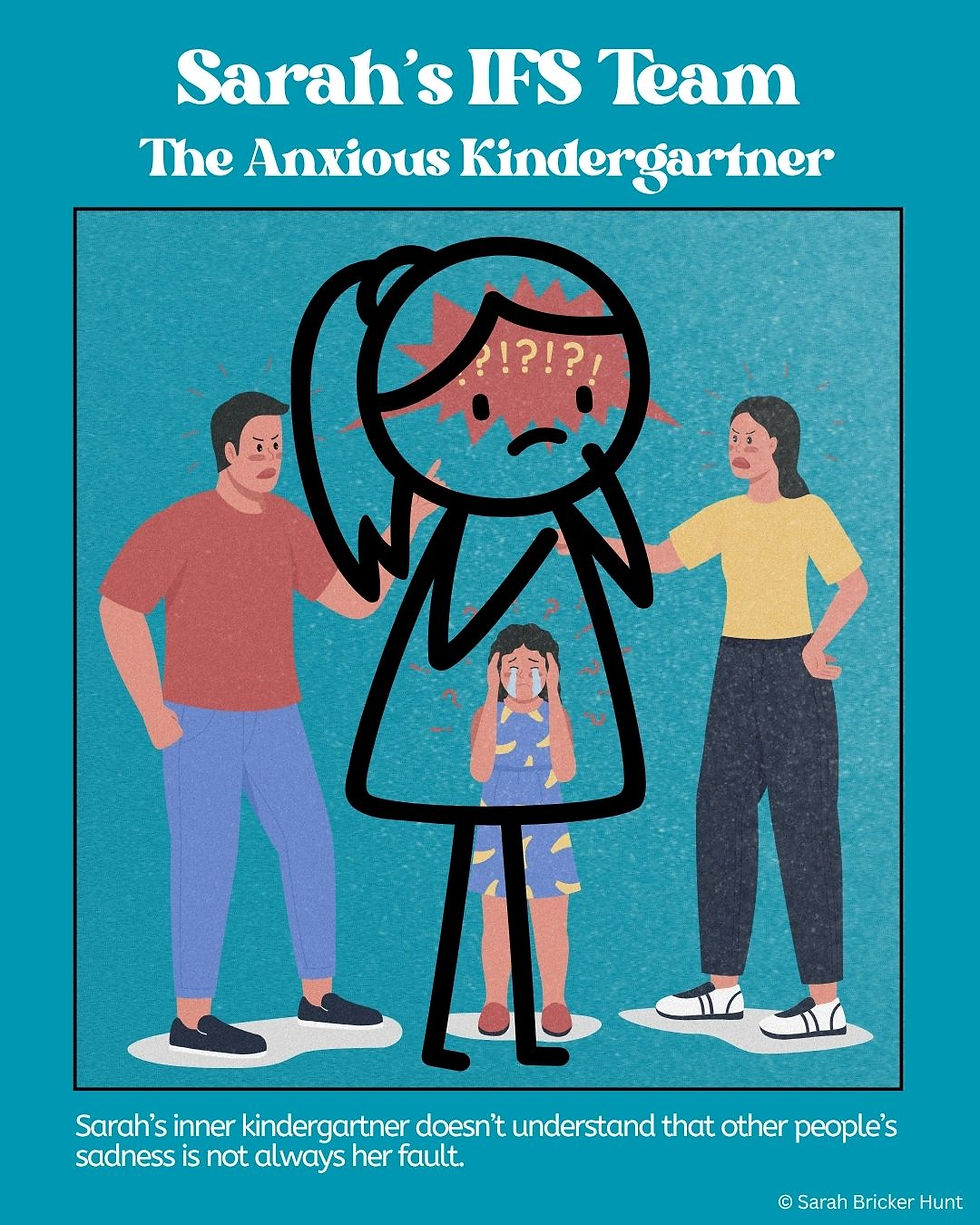
Learning to identify and address the needs of your parts is central to IFS. Some parts may need healing, like issues held over from childhood. So, you might find yourself talking to (or at least considering) younger versions of yourself who didn’t necessarily get everything they needed when you were growing up.
As you work through IFS therapy, breakthroughs sometimes occur when you realize how lasting childhood impacts (or later traumas) can really be — but, importantly, how these moments in time do not have to define who you are for life. IFS says we can revisit and rebuild. Honestly, so much of it is about pouring love and acknowledgement into yourself and learning to accept that you do deserve love.
It’s a lot.
And of course, IFS is a “your mileage may vary” situation just like any other therapy. I’ve read some critiques of IFS, but they are usually centered on therapists who aren’t as adept at framing and explaining the concepts, or on the idea that it’s an “end all/be all” situation when in reality, we can often benefit from IFS and things like CBT together. Oh, and breath therapy, which was the first key that uncorked me (somewhat — I’m very difficult to fully uncork). I didn’t realize I was rarely taking full breaths, but figuring out that I wasn’t and how instantly relieving it is to do some focused breathing was huge for me.

To me, IFS simply offers a vocabulary and a toolset for framing our issues in a really relatable way. Instead of getting into the weeds with neuropsychology and biology, it’s easy to visualize different elements of your psyche as literal, physical team (or family) members. I know it’s more complex than this, but it’s also as simple as this, and I think that’s why it’s clicked for so many people.
Why I’m on the IFS Train
It’s been both terrifying and incredibly relieving to revisit and let go of some core beliefs I’ve carried throughout life. I know I’m vague-posting here, but things like feeling like I’m responsible for everyone else’s happiness or that I’m never going to be good enough or that if anything is wrong in my vicinity, that it’s probably my fault...

My default inner voice can be really, really cruel, and it’s been life-changing to talk to my inner 6-year-old and say, “Hey, little Sarah, I’m sorry you are already worrying about so many things, but you don’t have to do that anymore. We’re OK now. We made it.”
I do a lot of talking with my controlling manager part to calm down when I’m stressed and to my unmotivated swamp creature part, which is drawn to bed rotting and time-suck phone scrolling, but mostly, my thought process in the difficult moments has changed.
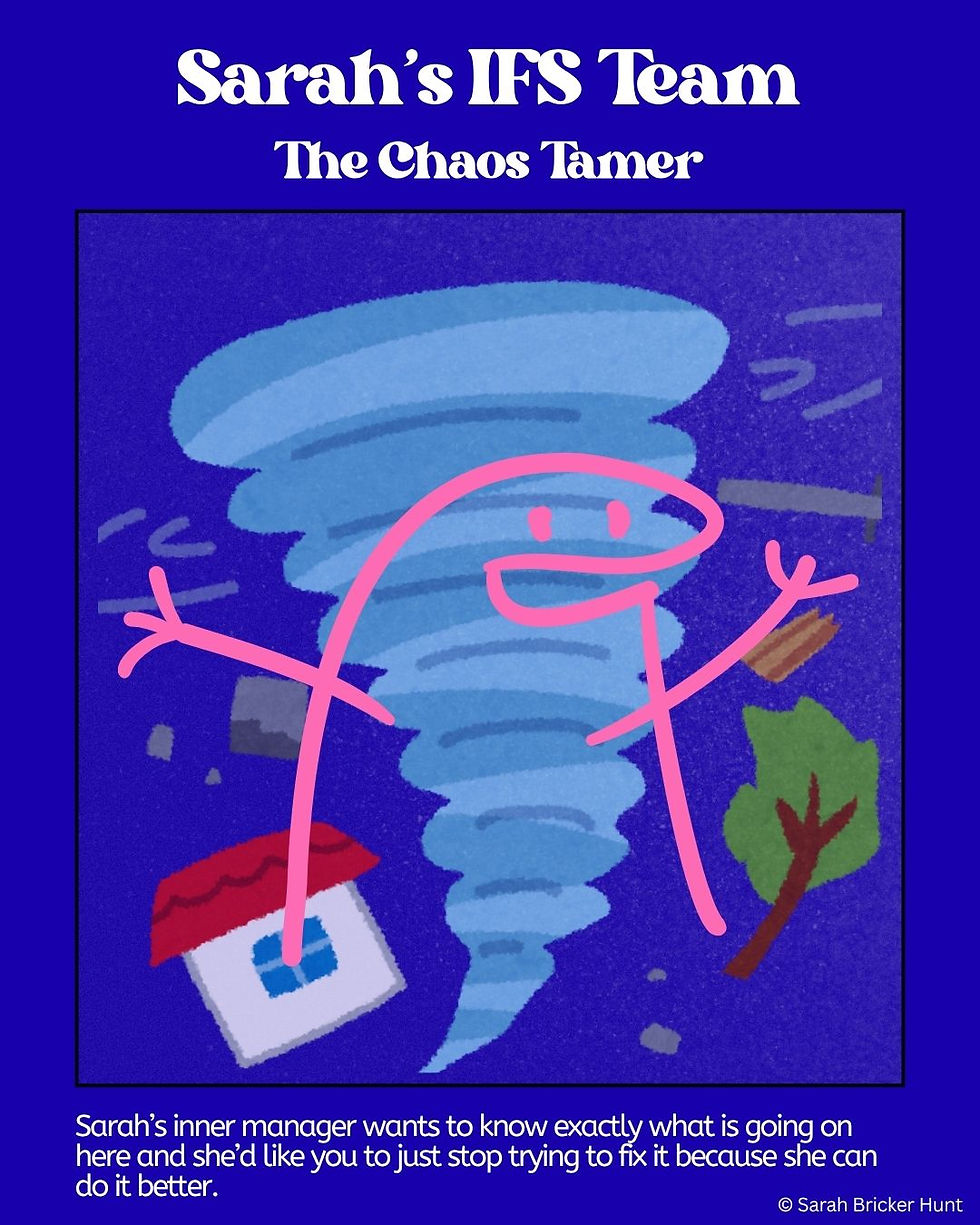
Instead of fixating on A Problem, I try to identify which part is causing some kind of emotional response or behavior. It’s not “Why am I so pissed off?” or “Why do I not want to get out of bed?” It’s “OK, which part has a need or request I could address, maybe in a healthier way?”
And then, I just try to listen to myself, which sounds obvious, but I generally tend to spiral into multiple simultaneous thoughts and eventual panic. I’m basically afraid to just let myself think — I’ll jump straight into FIX THIS NOW mode instead of just allowing myself (or others) to just feel what I (or they) feel. I’m learning to not be so afraid of ceding control like that, which has unlocked all sorts of things, like allowing myself to be creative in whatever organic way I want to here on this blog. It’s healing something in me, and I know it all goes back to this therapy.
While I wish everyone could go to therapy with a great therapist, I know it’s not possible. But if you’re intrigued by IFS, read Richard Schwartz’s books and follow creators who are well-regarded in this field, like Emily Powell. I’d be happy to share my therapist’s information if you want to send me a message, too (I just don’t want to link to her here without asking her first). Thanks to the magic of the internet, you can even watch Schwartz himself leading a session on YouTube.
Even if you aren’t sold and you think IFS is too new or just a fad, I hope you’ll at least consider reframing the way you approach problems big and small (if you’re having trouble getting past something or find yourself in longterm patterns you’d like to resolve). IFS helps me feel more authentic, and if I can identify the things I have to offer that feel authentic and share them, the energy I’m putting out there is bound to connect to the energy that binds us all as human beings. I swear I’m not even high! Maybe 3 months from now I’ll be cringing that I even wrote this, and that’s OK, too. It’s what I want to write in this moment right here. That’s awesome — good job, younger Sarah who was frequently discouraged from pursuing a career involving writing or creativity. You’re allowed to write whatever you want.
So, lovely person still reading this long post, whether it’s meditation or forest bathing or going on an ayahuasca journey, I think whatever gets you to the core of who you really are is worthwhile, and I know it’s a gift to have the chance. I hope you’ll take the leap if you need or want to.
Because I also know that if I can love better and feel better and let go better, it’s not going to change the world, but maybe it will allow me to create more and to experience things more fully and to be able to listen better and to be a better mom, partner, friend, and community member. Maybe this whole “journey to self,” however we get there, is the entire point of basically everything?


Comments